Article: The Complete Sourdough Supplies Guide for Home Bakers — From Starter to Crust
The Complete Sourdough Supplies Guide for Home Bakers — From Starter to Crust
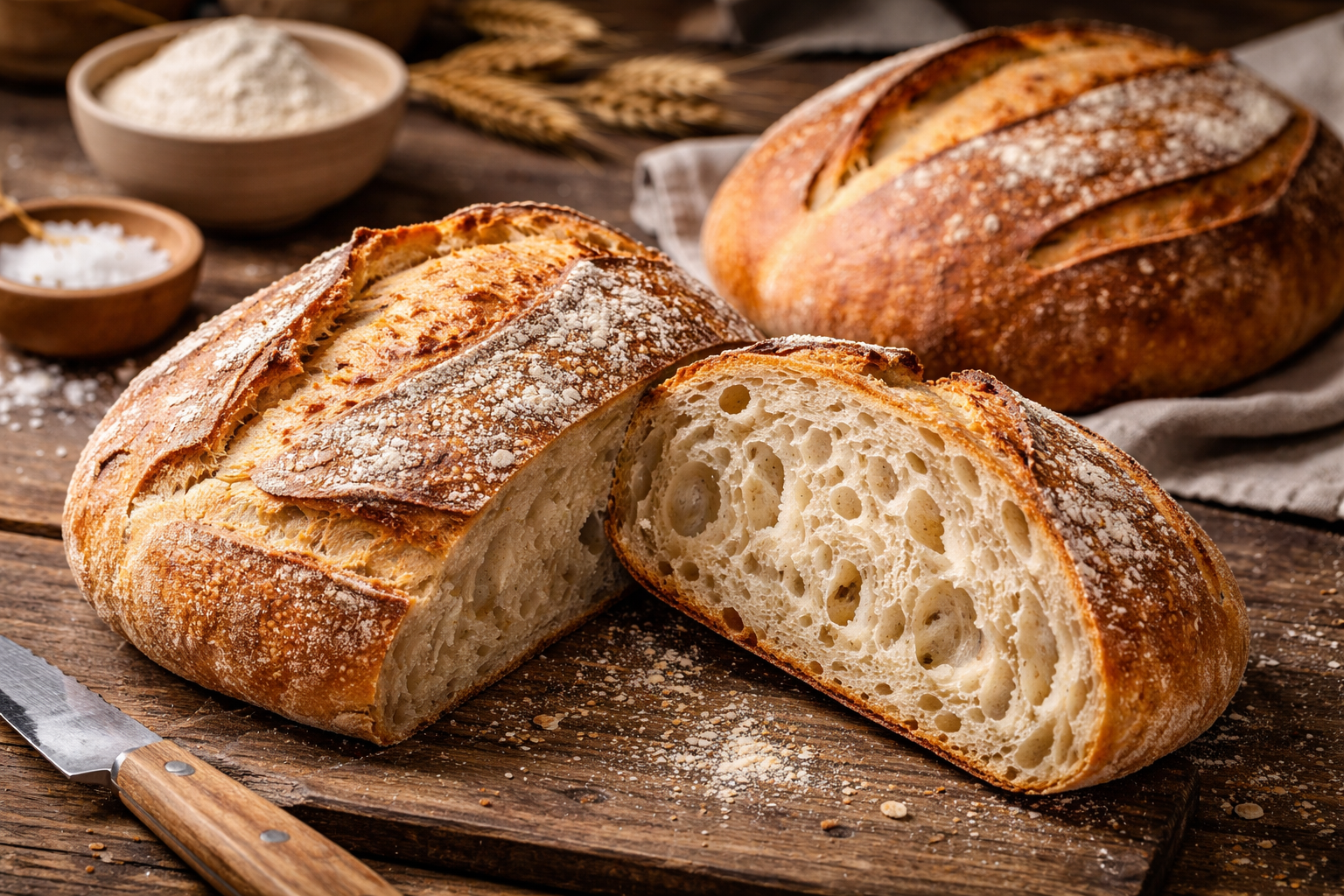
There is something deeply satisfying about pulling a golden, crackling loaf of sourdough bread out of the oven. The aroma fills the kitchen. The crust shatters when you tap it. And you made it from scratch — flour, water, salt, and a living starter that you have been tending like a little garden on your countertop. Sourdough baking is one of the most rewarding things a home cook can take on, and it does not have to be intimidating. With the right sourdough supplies and a little guidance, anyone can bake beautiful, delicious loaves at home.
At Cooks on Main in Williston, North Dakota, we carry the largest assortment of sourdough supplies in the region — everything from Dutch ovens and proofing baskets to digital scales and Danish dough whisks. Whether you are just starting your sourdough journey or you have been baking sourdough bread for years and want to upgrade your toolkit, we have everything you need right here in western North Dakota.
Why Sourdough Baking Has Won Over Home Kitchens Everywhere
The Ancient Craft That Never Goes Out of Style
Sourdough is the oldest form of bread making in human history. Long before commercial yeast existed, bakers kept a jar of wild-fermented starter alive on their countertops, feeding it flour and water, and using it to leaven their bread day after day. That tradition is alive and well today, and for good reason. Sourdough bread has a depth of flavor, a chewy crumb, and a crackling crust that no store-bought loaf can match. Many bakers also find it easier to digest than bread made with commercial yeast, thanks to the long fermentation process that breaks down gluten and phytic acid over time.
What Makes Sourdough Bread Different
The difference is in the starter. A sourdough starter is a fermented mixture of flour and water that captures wild yeast and beneficial bacteria from the environment. When you mix that starter into your dough, those wild yeasts produce carbon dioxide that makes your bread rise, while the bacteria produce lactic and acetic acids that give sourdough its characteristic tang. The result is a loaf of sourdough bread that is alive with flavor, texture, and character — something you simply cannot get from a packet of instant yeast.
Why Home Bakers Are Falling in Love with Baking Sourdough
Baking sourdough bread at home has surged in popularity because it connects people to something real and slow. In a world of instant everything, sourdough demands patience. You feed the starter. You mix the dough. You wait. You shape the loaves. You wait again. And then — after all that anticipation — you open the oven and the smell of fresh bread fills every corner of your home. It is a process that rewards attention, and the results speak for themselves.
Your Sourdough Journey Starts at Cooks on Main
The Best Sourdough Supplies in North Dakota, Right Here in Williston
Cooks on Main is a small business rooted in the heart of Williston's downtown. Since 2010, owner Angela Skogen has made it her mission to bring big-city baking supplies and kitchenware to western North Dakota — without losing the warmth and personal service that defines small-town community. When it comes to bread baking, we are proud to carry the most complete selection of sourdough baking tools and baking supplies in the region. From the very first jar you use to house your starter, to the Dutch oven that bakes your loaves to perfection, Cooks on Main has you covered every step of the way.
A Complete Assortment of Sourdough Tools for Every Level of Baker
Whether you are a curious beginner or a seasoned sourdough baker looking to invest in serious equipment, our shelves carry the tools, brands, and baking supplies to support your craft. We carry premium brands trusted by home bakers and professional chefs alike — including Le Creuset, USA Pans, and Breville — alongside approachable, well-made options for those just getting started. If you are not sure what you need, our knowledgeable staff is always here to help you figure it out.
The Essential Sourdough Baking Tools Every Baker Should Own
Where to Begin: Building Your Sourdough Toolkit
You do not need a fully stocked bakery to start baking sourdough bread at home. A few tools and a little patience will take you a long way. But having the right sourdough baking tools makes the process more consistent, more enjoyable, and more successful. Here is a breakdown of what you need — from the essential tools every baker must have, to the upgrades worth investing in as your skills grow.
The Sourdough Starter: Your Most Important Ingredient
Choosing the Right Glass Jar for Your Starter
Before any other tool, you need a sourdough starter. A starter is simply flour and water that has been fermented over seven to ten days, developing the wild yeast and bacteria that will leaven your bread. Once it is active and bubbly, you feed it regularly — discarding some and adding fresh flour and water — to keep it healthy and strong.
For housing your starter, a glass jar with straight sides is ideal. The straight sides make it easy to see how much your starter has risen after each feeding, which is a key sign of activity. Weck jars are a favorite among many bakers for their wide mouth and clean design. Mason jars work beautifully as well. Keep two jars on hand — one for your active starter on the counter, and one for a backup portion stored in the fridge. When your starter is cold, it goes dormant and can be left unfed for one to two weeks without harm. When you are ready to bake, simply pull it out, feed it, and let it come back to life at room temperature.
Measuring Ingredients: The Kitchen Scale
Why a Kitchen Scale Is a Must Have for Sourdough Bread
Sourdough baking is a precise craft. Unlike cooking, where you can eyeball a handful of herbs and call it done, bread making requires accurate ratios — especially when it comes to water and flour. Two people can measure a cup of flour and end up with wildly different amounts depending on how they scoop. A kitchen scale eliminates that variable entirely by measuring in grams. Every professional baker and serious home baker measures by weight, and once you start, you will wonder how you ever baked without it. A kitchen scale is truly one of the essential tools no sourdough baker should be without.
Mixing the Dough: Whisks and Bowls
The Danish Dough Whisk — A Must Have Sourdough Baking Tool
When it comes to mixing your starter into your flour and water, a danish dough whisk is the tool that changes everything. The danish dough design — a spiral of stiff wire on a wooden or metal handle — cuts through thick, wet bread dough in a way that a standard whisk simply cannot. It mixes efficiently without overworking the dough, and it cleans up without the mess of tangled dough strands stuck to a traditional whisk. Many bakers consider the danish dough whisk one of the most-used tools in their entire sourdough toolkit. If you use a dough whisk once, you will reach for it every single time.
The Right Bowl Makes Bread Making Easier
The bowl you mix and ferment your dough in matters more than you might think. A wide, deep bowl gives the dough room to expand during bulk fermentation — the long, slow first rise after mixing. Many bakers prefer a clear glass or plastic bowl so they can watch the dough from the sides and track how much it has risen. A four-quart bowl works well for most standard sourdough bread recipes. Some bakers prefer a square, straight-sided container because it makes it easier to judge a precise percentage rise — for example, you can see clearly when the dough has doubled in size.
When a Stand Mixer Is Worth It
For most sourdough bread recipes, mixing by hand is perfectly fine — and actually preferred by many bakers, since the stretch-and-fold technique used in sourdough does not require heavy kneading. But a stand mixer is genuinely useful for stiffer bread dough, like sourdough bagels, enriched loaves, or rye bread, which can be tough to work by hand. If you bake often and your hands and arms feel the toll, investing in a stand mixer is a smart move. Cooks on Main carries Ankarsrum and Breville stand mixers — two of the most respected brands in home baking.
Shaping and Handling: Scrapers and Parchment Paper
The Bench Scraper — One of the Most Essential Sourdough Tools
A bench scraper is one of those sourdough tools that bakers always say they did not know they needed until they had one. This flat, rectangular metal or plastic blade is used to divide dough, shape loaves, move sticky dough across the counter without tearing it, and keep your work surface clean. For handling wet sourdough dough, a bench scraper is indispensable. A metal scraper works best on wood or laminate counters; a plastic bench knife is gentler on stone surfaces like granite or quartz.
Parchment Paper — The Unsung Hero of Sourdough Baking
Parchment paper is a must have for baking sourdough bread at home, and many bakers go through it constantly. When it comes time to transfer your proofed loaf into a screaming hot Dutch oven, parchment paper is what makes that possible safely and without deflating your dough. You simply flip your proofed loaf out of the proofing basket onto a sheet of parchment paper, score the top, then lift the whole thing — parchment and all — into the preheated pot. The parchment paper handles the heat without burning, keeps the bread from sticking to the bottom of the Dutch oven, and makes cleanup easy. Reusable parchment paper is available and worth considering if you bake loaves frequently.
Plastic Wrap and Covering Your Dough
During the long fermentation and proofing stages of sourdough baking, your dough needs to be covered to prevent a dry skin from forming on the surface. While plastic wrap works fine, many bakers prefer reusable silicone bowl covers or a damp kitchen towel. Keeping the dough covered at the right moisture level is a small detail that makes a real difference in the final texture of your loaves.
Proofing Your Loaves: Baskets and Bannetons
The Proofing Basket — Shape, Structure, and Beauty in One Tool
Once you have shaped your dough into a round or oval loaf, it needs to proof — a second, slower rise — before it goes into the oven. This is where the proofing basket comes in. A proofing basket, also known as a banneton, is a woven basket — typically made from rattan — that cradles the shaped dough as it rises. The basket supports the sides of the loaf so it holds its shape instead of spreading out flat. It also leaves beautiful spiral patterns on the surface of the bread that are unmistakably sourdough.
Choosing the Right Banneton Baskets
Proofing baskets come in two primary shapes: round and oval. Round banneton baskets are ideal for classic boule-style sourdough bread — the round, domed loaves that look stunning on a cutting board. Oval bannetons produce a batard, or oval-shaped loaf, which many bakers prefer for slicing into sandwich portions. Most standard bread recipes will specify which shape works best, but many bakers own both and choose based on the recipe. Banneton baskets can be used with or without a linen liner. The liner prevents sticking and produces a smoother surface on the dough; without the liner, you get the classic spiral pattern. Either way, dust your proofing basket generously with rice flour before placing the dough inside — rice flour resists absorption better than wheat flour and reduces the risk of sticking.
Banneton Baskets as Bread Baskets at the Table
A beautiful round proofing basket can also double as a bread basket at the table, making it a charming and practical addition to any kitchen. Many bakers find that high-quality banneton baskets become one of their favorite pieces of baking gear — functional, beautiful, and used in almost every bake.
Scoring the Dough: Lame and Knife
The Bread Lame — Essential for Controlling How Your Bread Rises
Just before your loaf goes into the oven, you need to score it — make one or more deliberate cuts into the surface of the dough with a very sharp blade. Scoring is not just decorative. It is essential. Without it, the dough will burst randomly as it expands in the oven, breaking through the crust at the weakest point in unpredictable ways. Scoring creates a controlled weak point that directs how the bread opens up during baking, giving you that beautiful ear — the raised flap of crust that is the hallmark of a well-baked sourdough loaf.
A bread lame (pronounced "lahm") is the purpose-built tool for this job. It typically consists of a handle or stick with a double-sided razor blade attached. The curved blade allows for a precise, angled slash that lifts the top of the loaf cleanly. Many bakers love the bread lame not just for its function but for the creative dimension it adds to baking — you can use it to score simple slashes or intricate decorative patterns.
Using a Sharp Knife or Razor Blade
If you do not yet have a bread lame, a very sharp knife with a thin blade can work in a pinch. The key is sharpness — a dull blade will drag across the dough and deflate it rather than cutting cleanly. A razor blade held directly in the fingers is another option that many experienced bakers prefer for intricate scoring. Handle with care, and always keep your blades fresh and sharp.
Baking Your Sourdough Bread: The Oven and the Dutch Oven
The Dutch Oven — The Single Most Important Sourdough Baking Tool
If there is one piece of baking equipment that transforms sourdough results more than anything else, it is the Dutch oven. Professional bakeries use steam-injected ovens to bake bread — the steam keeps the surface of the dough moist and flexible during the first phase of baking, allowing the loaf to expand fully before the crust sets. Home ovens cannot replicate that steam environment on their own. But a Dutch oven solves this problem perfectly.
When you preheat a Dutch oven in a very hot oven and then place your shaped dough inside with the lid on, the moisture that naturally releases from the dough as it bakes is trapped inside the pot. That steam creates the same humid environment that professional steam-injected ovens provide. The result is dramatic oven spring — the rapid rise that happens in the first fifteen minutes of baking — and a gorgeous, blistered crust. After the first phase of baking with the lid on, you remove the lid to let the crust dry and develop deep color and crunch. Without a Dutch oven, it is very difficult to achieve a truly crusty bread at home.
Cast Iron Dutch Oven vs. Enameled Dutch Oven
There are two main types of Dutch ovens used for sourdough baking: bare cast iron and enameled cast iron. A cast iron Dutch oven — like the Lodge Combo Cooker — is rugged, affordable, and nearly indestructible. Many bakers prefer baking on the shallow lid of the combo cooker because it makes it easier to lower the dough in without burning your forearms on the sides of the pot.
An enameled Dutch oven, like the iconic Le Creuset, offers the same baking performance with a more refined look and easier cleanup. The enamel surface does not require seasoning and resists rust. Cooks on Main carries Le Creuset Dutch ovens and cast iron options — our staff can walk you through the tradeoffs and help you find the right pot for your budget and baking style. Whichever style you choose, make sure your Dutch oven has a lid that fits tightly and can handle oven temperatures of 500°F or higher.
The Baking Stone: A Great Alternative for Sourdough Baking
Some bakers prefer a baking stone — also called a pizza stone — over a Dutch oven, particularly for batards and baguettes that do not fit easily into a round pot. A baking stone absorbs and radiates intense heat from below, giving your bread a crisp bottom crust. When used in combination with a steam source — like a cast iron pan of boiling water placed in the bottom of the oven — a baking stone can produce excellent results for open baking. Many experienced bakers own both a Dutch oven and a baking stone, choosing between them based on the shape and style of loaves they are making. Cooks on Main carries baking stone options to complete your bread baking setup.
Parchment Paper and the Dutch Oven: How They Work Together
The most common way to transfer proofed dough into a preheated Dutch oven is to use parchment paper as a sling. After your loaf has finished proofing in the proofing basket, flip it onto a sheet of parchment paper. Score the top, then use the edges of the parchment paper to lower the entire loaf — paper and all — gently into the hot pot. The parchment paper sits flat on the bottom of the Dutch oven under the bread, and you simply replace the lid and bake. This method prevents burning, protects the crust, and makes the whole process far less stressful. Parchment paper is one of those humble baking supplies that every sourdough baker goes through steadily.
Optional Sourdough Supplies That Serious Bakers Love
Tools That Take Your Sourdough Baking to the Next Level
Once you have the essential tools and have baked a few loaves, you may find yourself wanting to troubleshoot and refine your results. These additional sourdough tools are not strictly required, but many bakers find them genuinely transformative.
The Digital Thermometer for Perfect Temperature Control
Temperature is one of the most important variables in sourdough baking — and one of the least talked about. Your starter ferments faster in a warm kitchen and slower in a cold one. The ideal temperature for bulk fermentation is between 75°F and 80°F. A digital thermometer lets you monitor the temperature of your dough and your starter with precision, taking the guesswork out of timing. It is also useful for checking the internal temperature of a finished loaf — sourdough bread is fully baked when the interior reaches around 205°F to 210°F.
Stand Mixer for High-Hydration and Stiff Doughs
If you find yourself drawn to rye bread, sourdough brioche, or very stiff doughs like bagels, a stand mixer becomes an important tool. A high-quality stand mixer with a dough hook takes the hard physical work out of mixing and kneading, letting you focus on the timing and fermentation side of your bread making. Cooks on Main carries Ankarsrum stand mixers — a beloved brand among serious bread bakers for their powerful, gentle mixing action.
Bread Bags for Storing Fresh Bread
Once your sourdough bread is baked and cooled, proper storage extends its life significantly. Bread bags made from linen or cotton allow the loaf to breathe while keeping the crust from going completely soft. Many bakers prefer to store sourdough bread cut-side down on a wooden cutting board for the first day, then move it to a bread bag thereafter. Plastic bags hold in too much moisture and turn the crust rubbery, so many bakers avoid them. Cooks on Main carries storage solutions including quality bread bags to keep your loaves fresh and delicious longer.
Sourdough Bread Recipes to Explore Once Your Toolkit Is Ready
Getting Comfortable with the Classic Loaf First
Starting with a Simple Sourdough Bread Recipe
The best way to learn sourdough is to bake the same recipe repeatedly. Making sourdough bread for the first time can feel complicated, but the basic formula is simple: flour, water, salt, and starter. Most beginner bread recipes use a ratio of about 75% hydration — meaning for every 100 grams of flour, you use 75 grams of water. Higher hydration doughs are more open-crumbed and airy, but also stickier and harder to shape. Starting with a moderate hydration loaf lets you get comfortable with the process — the stretch and fold during bulk fermentation, the pre-shape, the final shape into the proofing basket, the cold proof in the fridge overnight, and finally the bake in the Dutch oven the next morning.
Rye Bread — A Hearty Tradition Worth Trying
Once you are comfortable with your starter and your process, rye bread is a natural next step. Rye bread made with sourdough has a dense, moist crumb, a deep earthy flavor, and keeps remarkably well compared to white sourdough loaves. It also ferments faster, since rye flour is particularly active with wild yeast. A starter fed with a portion of rye flour becomes especially lively and enthusiastic — many bakers keep a dedicated rye starter just for this reason.
Sourdough Supplies Make Wonderful Gifts
Sharing the Joy of Bread Baking
Christmas Gifts for the Sourdough Baker in Your Life
If you know someone who loves to bake, a thoughtfully assembled set of sourdough baking tools makes one of the most meaningful gifts you can give. Cooks on Main is the perfect place to shop for sourdough-related Christmas gifts — whether that is a beautiful banneton basket, a sturdy bench scraper, a premium bread lame, or a showstopping Le Creuset Dutch oven. We also carry gourmet flours, premium finishing salts, and specialty baking supplies that pair beautifully with handmade sourdough bread. Our experienced staff can help you build the perfect gift for every level of baker, from the curious beginner to the seasoned home bread baker who bakes loaves every weekend.